1. Build on a Neutral Colour Palette.
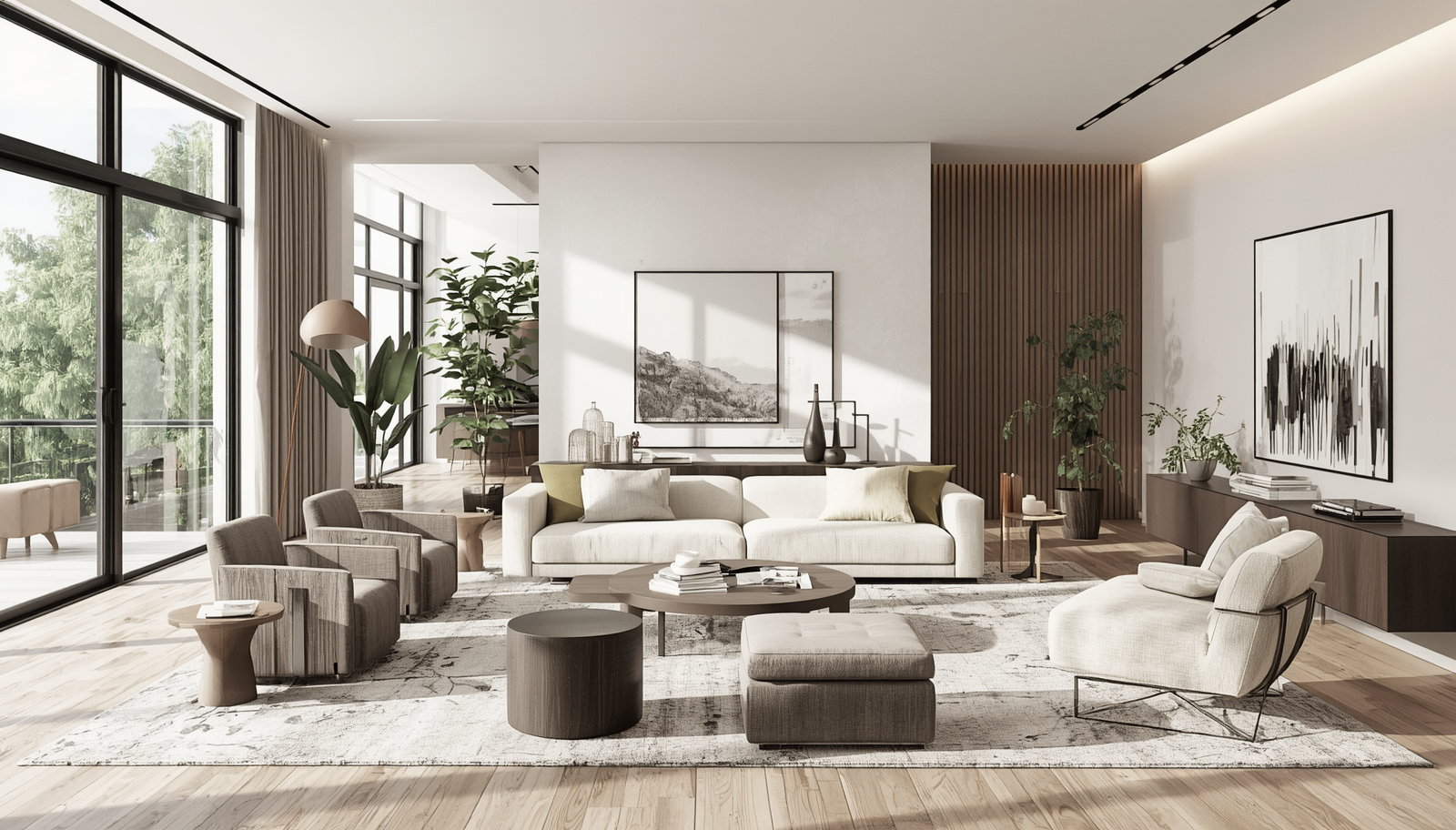
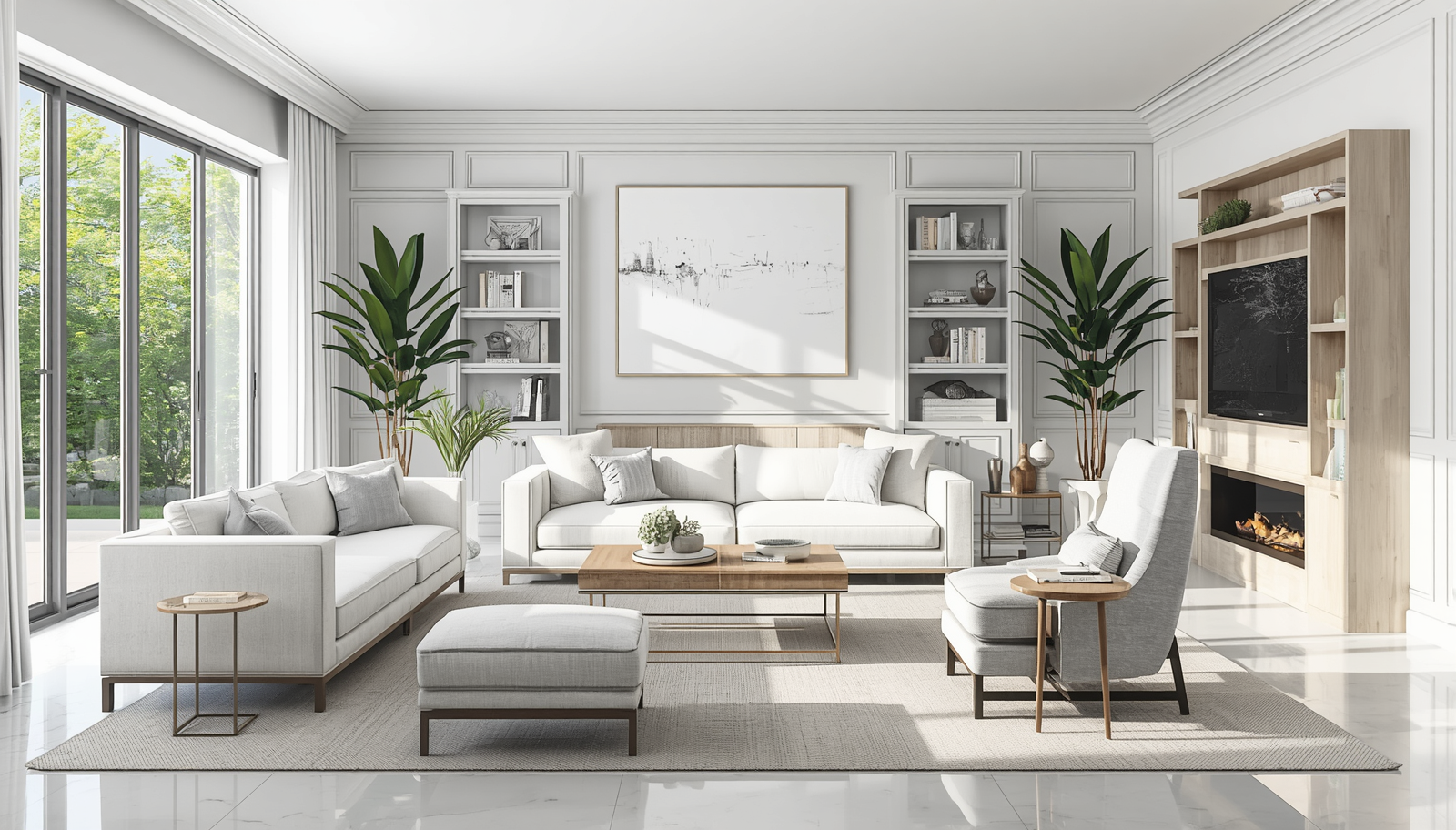
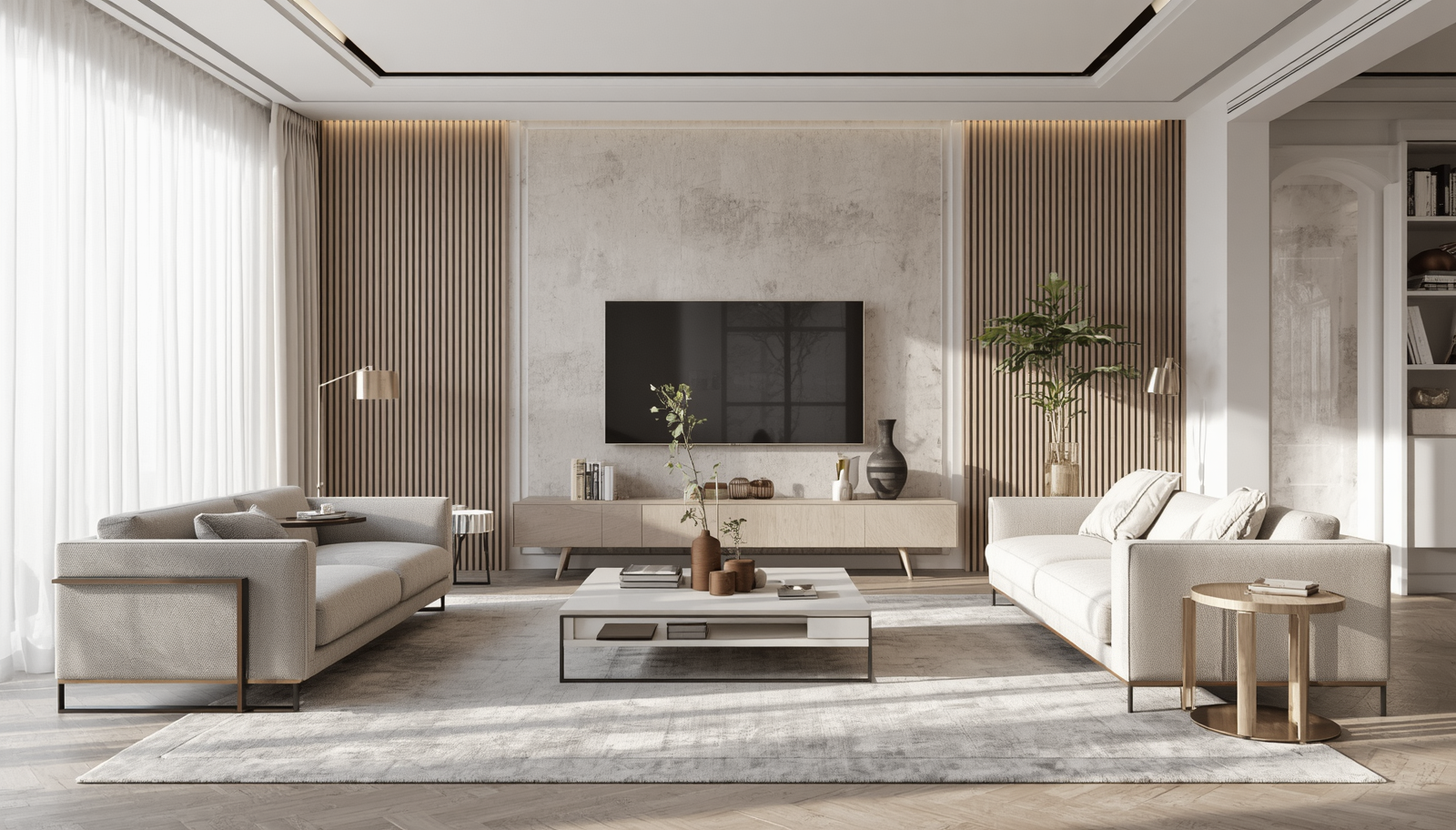
Neutral colours endure because they don't fight with anything. Off-white, warm linen, taupe, greige, and soft stone sit quietly in the background while texture, light, and form do the interesting work.
The key is tonal variation. Use a slightly darker shade on one wall, a lighter tone on the sofa, and a mid-tone on the rug. This layering creates depth without noise, and it will look just as considered in twenty years as it does today.
3. Anchor the Space With Natural Materials.
Contemporary design without warmth becomes clinical. Natural materials, particularly timber, prevent that. A slatted feature wall, a floating media unit, hardwood floors in a herringbone pattern: one strong wood element is enough to ground a neutral room and give it a sense of permanence.
Stone, linen, and leather carry the same quality. They age well, improve with use, and never read as dated the way synthetic finishes do.
4. Choose Furniture for Form as Much as Function.
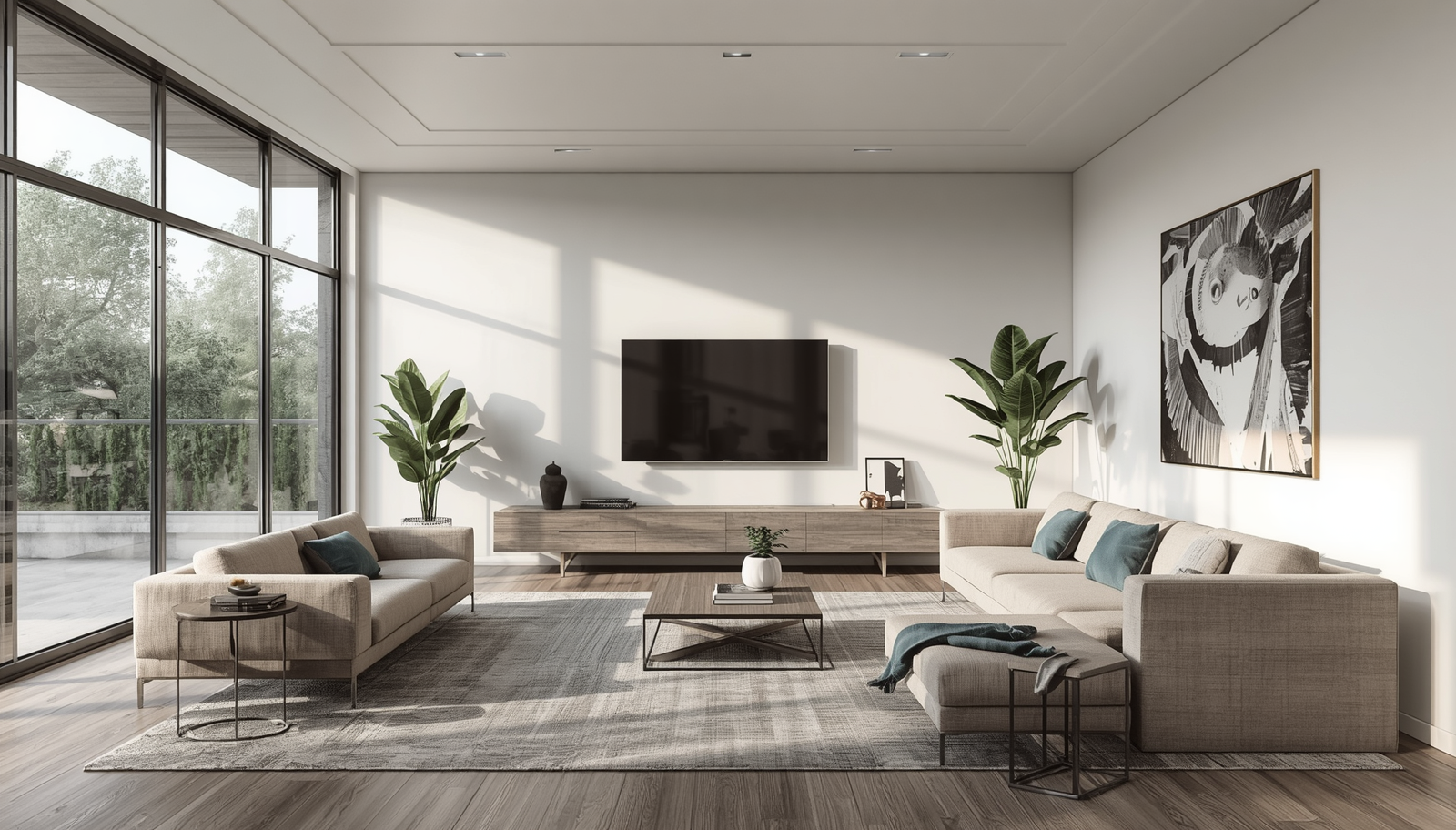
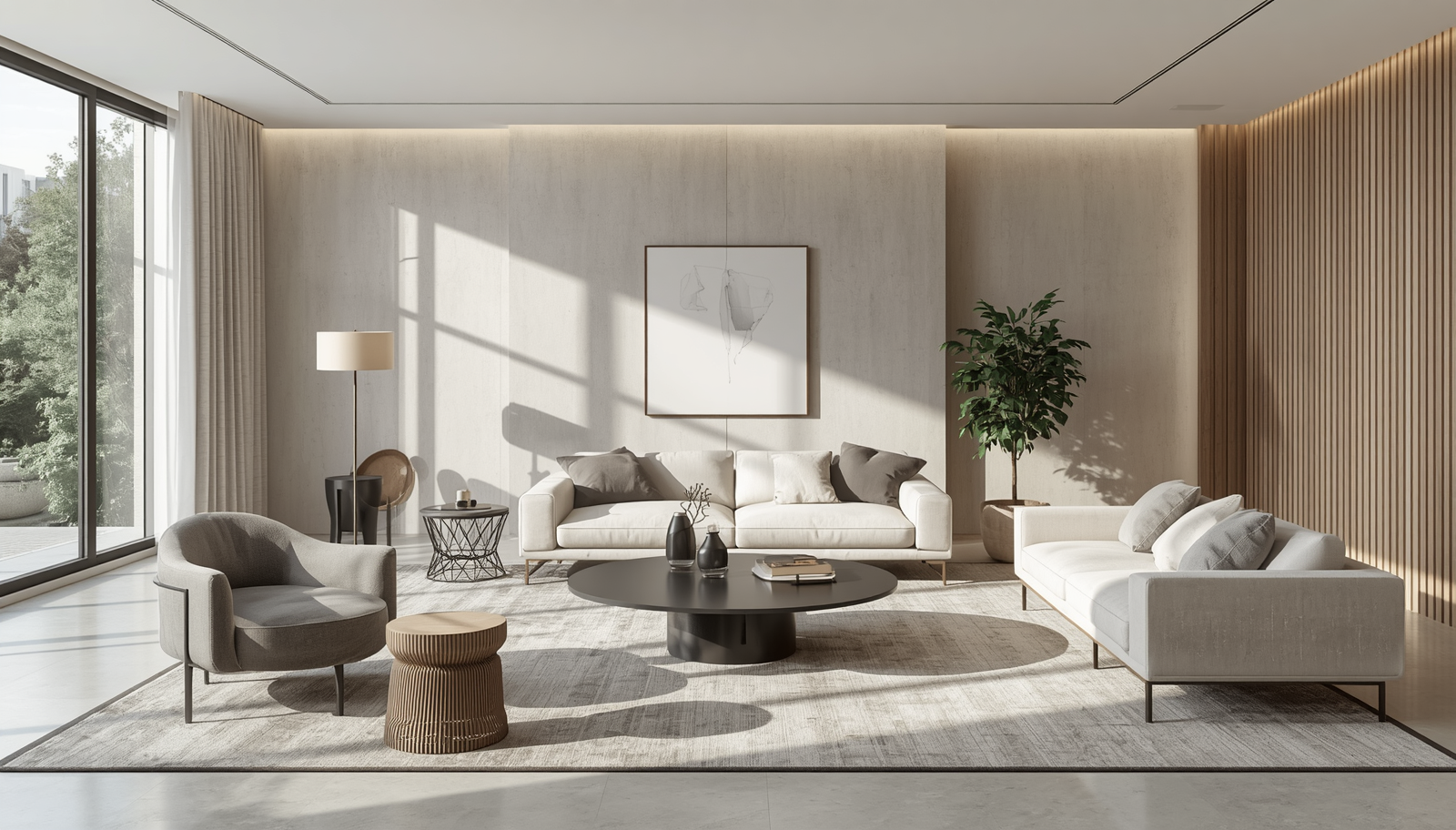
Well-chosen furniture is the most durable investment in a room. A large, generous sofa in a neutral fabric anchors the space. Accent chairs with a distinct silhouette add personality. A coffee table in a contrasting material, marble, dark wood, brushed metal, provides a focal point at eye level from the sofa.
Mix the geometry too. A rectangular sofa paired with a round coffee table or a curved accent chair creates visual interest through contrast rather than colour, which means it holds up regardless of what is fashionable at any given moment.
5. Decorate With Restraint.
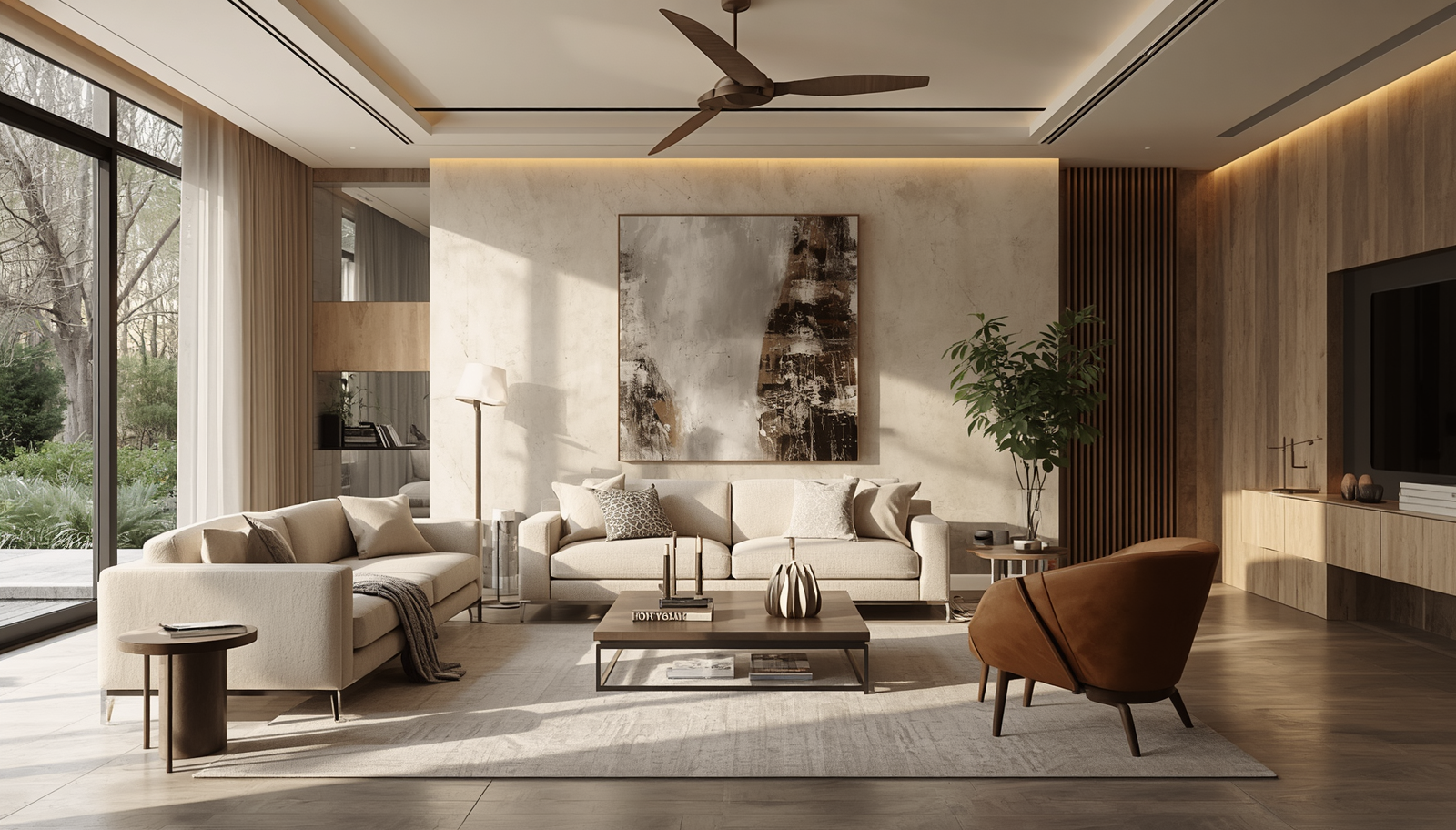
The objects in a room say as much as the furniture. One large-scale artwork, a small grouping of ceramic vessels, one or two architectural plants, that is usually all a well-proportioned room needs.
The most common mistake is accumulation: too many small objects, too many competing focal points. A useful test is to remove half your accessories and live with the result. Most people find the room improves, and they rarely miss what they took away.
6. Layer Your Lighting.
Natural light handles the daytime. For evenings, a considered lighting plan matters more than most people realise. The most effective approach layers three types: ambient light from the ceiling, task light beside a reading chair or sofa, and accent light to highlight architectural features or artwork.
Warm-toned bulbs, around 2700K complement neutral palettes in a way that cooler daylight bulbs never do. The warmth they cast in the evening is one of those details that is hard to name but immediately felt.
The Underlying Principle
Every element here points to the same idea: a room that is built on enduring qualities, good light, natural materials, considered proportion, and restraint, will never need to be redesigned because a trend has passed.
Buy less, choose better, and let the space breathe. That approach has never gone out of style, and it never will.
Zenmora co.
No comments yet. Start the thread.